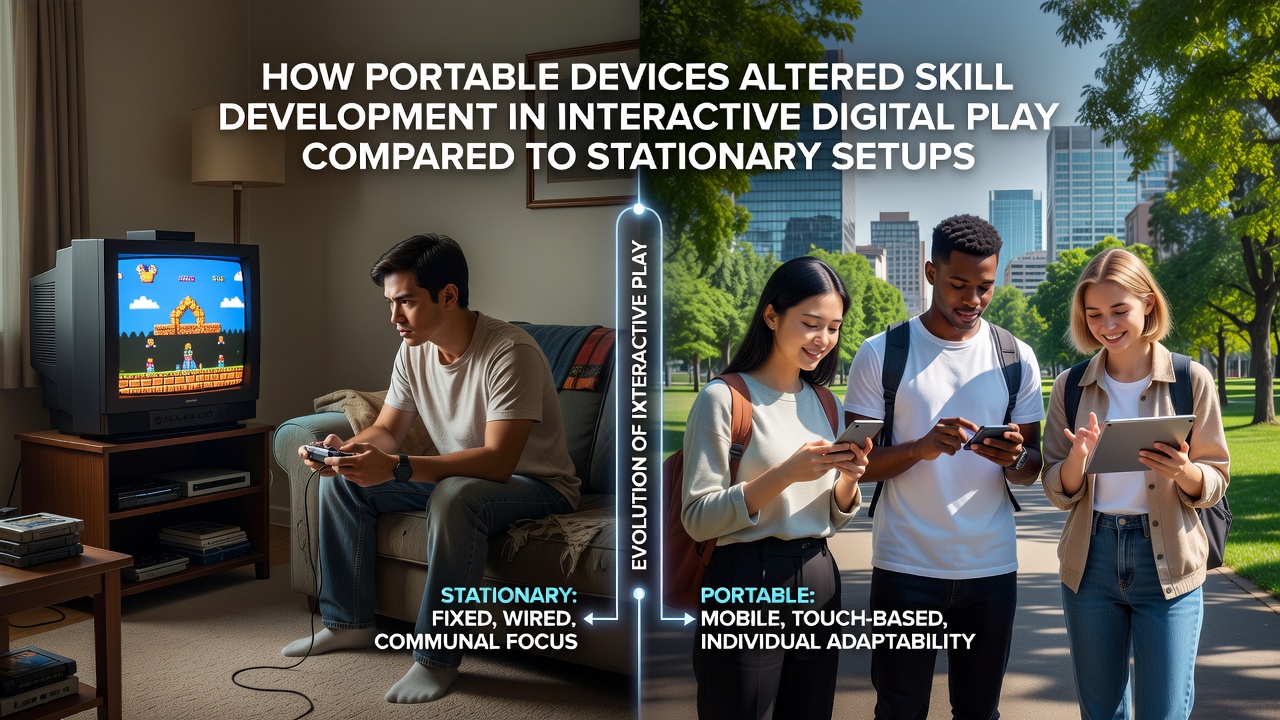
How Portable Devices Altered Skill Development in Interactive Digital Play Compared to Stationary Setups
Portable devices have shifted how people develop skills through interactive digital play, moving from fixed consoles and PCs toward smartphones and tablets that travel anywhere, and this change shows up clearly in areas like hand-eye coordination along with cognitive flexibility. Researchers tracked these patterns over years, noting that shorter play sessions on mobile screens often build rapid decision-making under time pressure while longer stationary sessions emphasize sustained attention and complex strategy building.
Early Comparisons in Reaction and Motor Skills
Stationary setups once dominated interactive play with their large screens and precise controllers, allowing players to refine fine motor control through extended campaigns, yet portable options introduced touch-based inputs that trained different muscle memory patterns. Studies from the National Institutes of Health have documented faster reaction times among frequent mobile users during quick-tap mechanics, whereas console data revealed stronger performance in sustained aiming tasks that require steady posture over hours. Observers note that these distinctions emerge because portable play happens in varied environments, training adaptability that stationary living-room setups rarely demand.
By the mid-2020s many educational programs began incorporating both formats to balance skill sets, and data collected through 2025 showed portable users gaining advantages in multitasking during brief sessions. Those advantages appear because screen sizes force simpler interfaces that reward split-second choices rather than elaborate planning sequences typical of desktop or console titles.
Cognitive Shifts and Environmental Factors
Portable devices altered spatial awareness development because players often engage while moving through real-world spaces, forcing constant recalibration of attention between digital elements and physical surroundings. Stationary play, by contrast, occurs in controlled settings where the environment stays predictable, letting focus remain entirely on virtual navigation. Australian research institutes published findings in 2024 indicating that children using tablets for puzzle-style games demonstrated improved peripheral vision tracking compared with peers limited to fixed monitors.
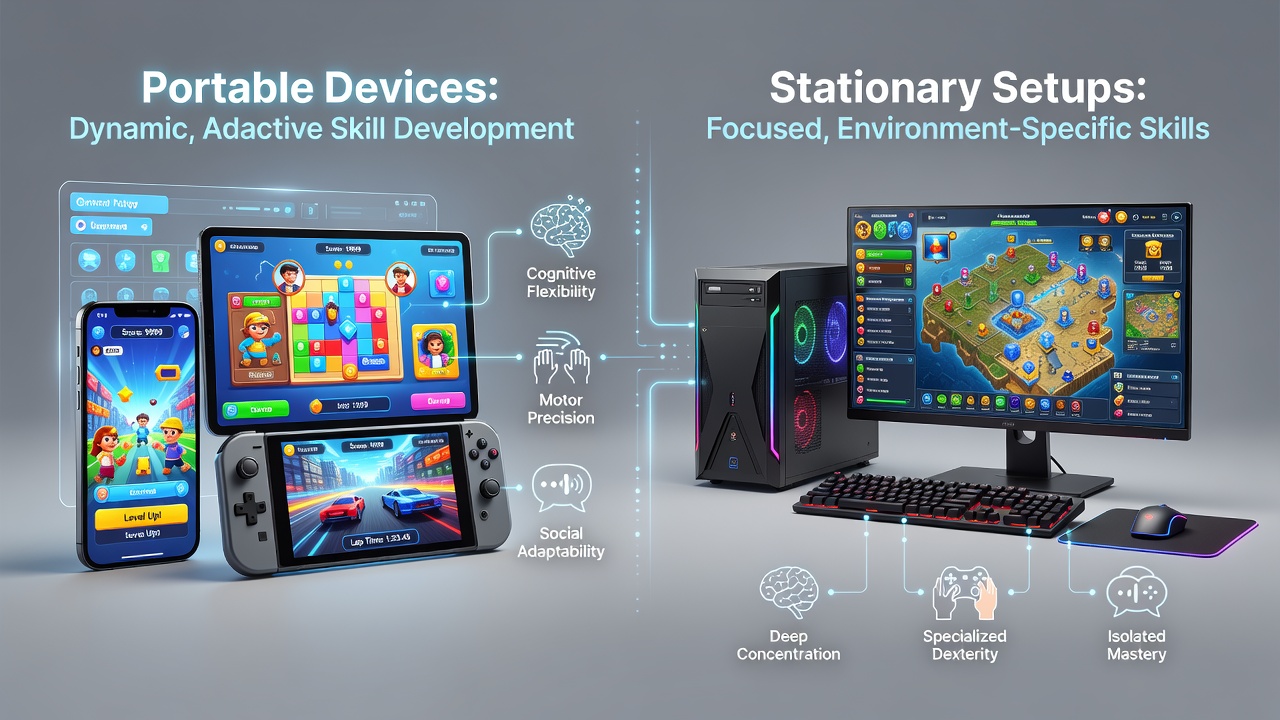
What's notable is how these environmental differences compound over time. A single study released by European gaming research networks found portable players adapted quicker to changing rulesets across multiple titles, while stationary groups excelled when tasks required memorizing long sequences without external distractions. The ball stays in the researchers' court to determine whether combining both formats produces the most well-rounded skill profiles, yet current figures already point toward complementary rather than competing outcomes.
Trends Emerging in 2026
August 2026 brought new reports from international digital literacy conferences that examined skill retention rates across device types. Preliminary numbers suggest portable play maintains momentum in casual daily use, while stationary setups continue supporting deeper immersion for competitive training. Industry organizations tracking these metrics note that hybrid approaches, where users switch between formats, correlate with broader skill acquisition in both reaction speed and strategic depth. Those patterns hold across age groups, though younger participants show quicker uptake of touch controls compared with older users who started on traditional controllers.
Evidence from university labs continues to separate the effects of input method from session length, revealing that touchscreens train precision under variable grip conditions while gamepads reward consistent thumb placement. Observers tracking August 2026 conference proceedings expect further longitudinal studies to clarify how these inputs influence long-term neural pathways involved in interactive decision-making.
Conclusion
Portable devices have expanded the contexts in which interactive digital play occurs, creating measurable differences in skill development when compared with stationary setups. Data from multiple regions shows portable formats strengthening adaptability and quick responses, whereas stationary environments support sustained focus and detailed strategy. Researchers continue gathering evidence on combined usage, and August 2026 updates indicate ongoing interest in how these tools together shape cognitive and motor abilities across populations. The distinctions remain grounded in measurable outcomes rather than assumptions about which format holds overall superiority.