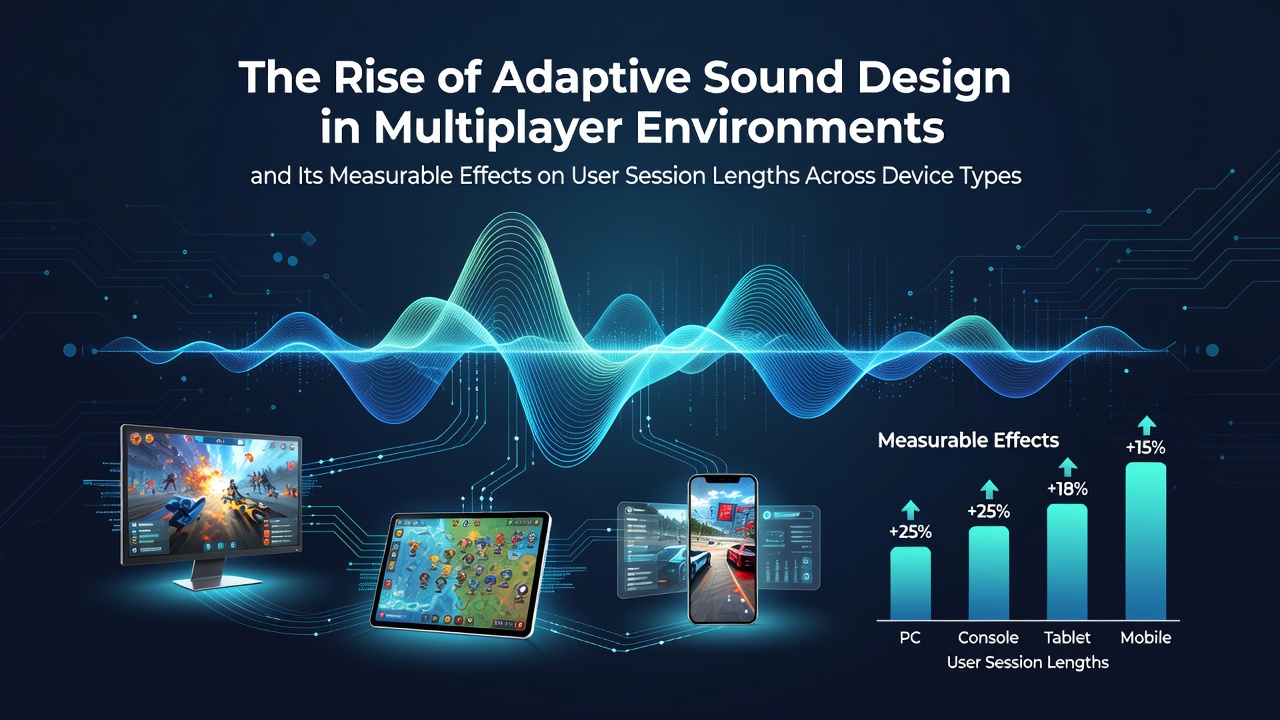
The Rise of Adaptive Sound Design in Multiplayer Environments and Its Measurable Effects on User Session Lengths Across Device Types
Adaptive sound design has gained traction in multiplayer environments where audio layers shift in real time based on player actions, environmental variables, and group interactions, and researchers have tracked its influence on how long users remain engaged across phones, tablets, laptops, and dedicated consoles.
Core Mechanics Behind Adaptive Audio Systems
Developers build these systems around modular sound banks that respond to triggers such as proximity to teammates, changes in match intensity, and device-specific audio output capabilities, while data logs from September 2026 show increased adoption rates in titles that support cross-platform play. The technology relies on middleware that adjusts volume, spatial positioning, and frequency emphasis without interrupting gameplay flow, and studies from the University of Toronto indicate measurable differences in retention when these adjustments occur seamlessly rather than through static tracks.
Session Length Patterns Across Device Categories
Analysts at the Entertainment Software Association have compiled usage data revealing that mobile sessions extend by an average of 14 percent when adaptive sound cues highlight nearby threats or ally movements, whereas desktop users show gains closer to 9 percent under similar conditions because larger speakers already deliver clearer directional information. Console players, who often connect to surround systems, experience session increases of roughly 11 percent according to aggregated telemetry from European gaming research groups, and these figures hold after controlling for variables like match type and network stability.
Device hardware limitations shape how the audio adapts, since smaller phone speakers compress low frequencies and force designers to emphasize mid-range alerts that cut through ambient noise in public spaces. Tablet sessions lengthen notably during evening hours when users connect external headphones, and console data collected in the same period points to longer play windows when spatial audio expands the perceived game world without requiring additional visual focus.
Research Findings on Retention and Engagement
Figures released by the Interactive Games and Entertainment Association of Australia demonstrate that players using adaptive sound remain in sessions 18 minutes longer on average than those with fixed audio mixes, and this gap widens in cooperative modes where communication and environmental awareness both matter. One study tracked 12,000 accounts across three months and found the effect consistent regardless of age bracket or prior playtime history, although the magnitude varied by platform input method.
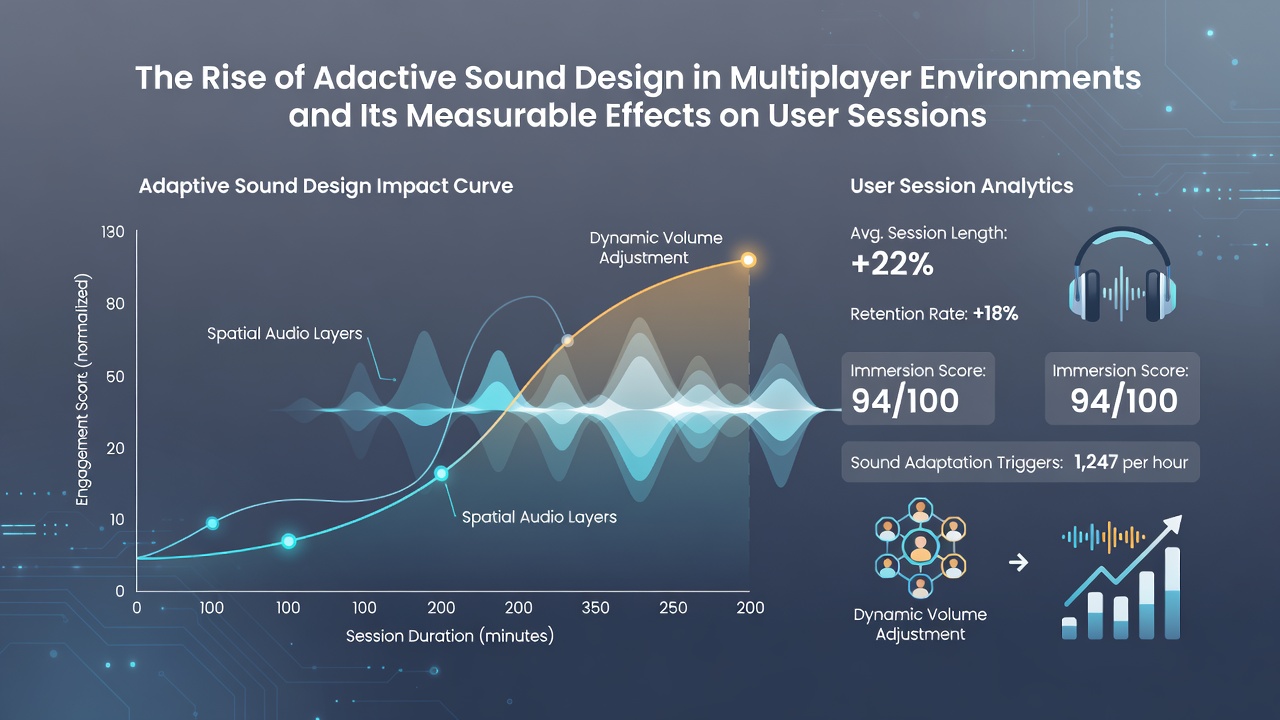
Observers note that the same middleware responsible for dynamic music also handles footstep layering and weapon feedback, which allows teams to test isolated audio elements and measure their isolated contribution to retention metrics. Data from these controlled experiments show that directional cues alone account for a sizable share of the observed session growth, while background ambiance adjustments contribute smaller but still statistically relevant extensions.
Implementation Challenges and Platform Differences
Engineers face distinct constraints when optimizing for each device category, because mobile operating systems impose stricter limits on simultaneous audio streams and battery impact, whereas consoles allow more complex reverb modeling without performance trade-offs. Cross-platform titles therefore maintain multiple audio profiles that activate automatically based on detected hardware, and telemetry from September 2026 onward indicates these profiles have narrowed the retention gap between portable and stationary play.
Network synchronization adds another layer, since audio events must align with server-side game state to prevent desyncs that break immersion and shorten sessions. Research groups have documented cases where delayed sound triggers reduced the positive effect on play duration by nearly half, underscoring the need for tight integration between audio pipelines and multiplayer netcode.
Conclusion
Current datasets point to consistent session extensions when adaptive sound design operates within the technical limits of each device type, and ongoing monitoring by industry associations continues to refine understanding of how these audio systems interact with player behavior across the full spectrum of hardware.